
Case law and costs: UK and EPO updates you need to know for 2026
Whether your clients already have UK or European patents, or you’re developing a strategy for these markets, there are a few changes you need to be aware of as you’re heading into 2026. From case law to costs, here are the updates you need to know.
Rises in UK IPO fees
The UK IPO is increasing its patent fees for the first time since 2018. This will see the fee for a patent search rise from £150 to £200, and the examination fee go from £100 to £130. These changes will come into force from 1 April 2026 and will support the IPO’s much needed investment in its systems.
Although this increase isn’t huge in real terms, it’s perhaps an indication that future rises will be coming.
Rises in EPO fees
The EPO is also increasing fees on 1 April 2026. Fees across the board are increasing by about 5%, for example the search fee is increasing from €1520 to €1595. The examination fee is going up from €1915 to €2010.
Renewal fees are jumping up too, so think about getting those paid early to save some cash!
EPO fee discounts for ‘micro entities’ and others
Applicants can get 30% off the EPO’s official fees if they meet the following two requirements:
The applicant is an individual, a micro entity (with fewer than 10 full-time employees and a turnover of less than €2m) or a non-profit
Have filed fewer than five patent applications with the EPO over the past five years
Given that for a direct filed application, fees to grant will be at least €6245 over three years, applicants could save at least €1873.50 or US$2185, which is definitely worth noting!
The discount is easy to apply for, with a straightforward declaration (no evidence is required).
Do we now have an on-sale bar in Europe?
Recently, there have been concerns that the recent decision of the Enlarged Board of Appeal at the EPO in G1/23 potentially creates an “on sale bar” similar to 35 USC 102 in the USA.
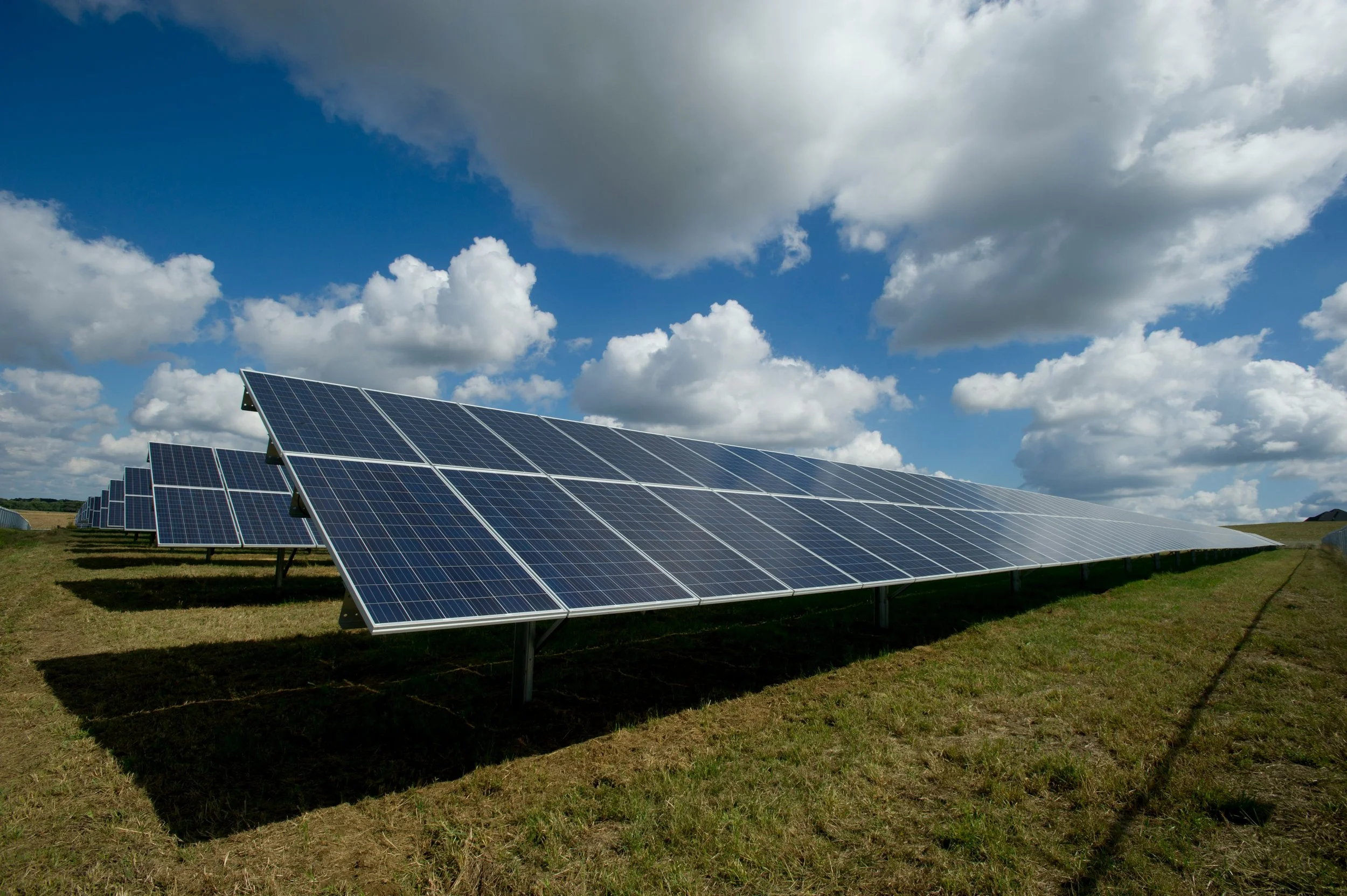
The decision relates to the invention of European Patent EP 2 626 911 and its ‘solar cell sealing material’. The claim related to the content and mechanical properties of the polymer material. The patent was granted and opposed on the basis that it was not inventive over a polymer called ENGAGE(R) 8400, which was commercially available at the priority date.
Currently, under EP law, if the sale of an invention is not an “enabling disclosure” to the public, then it may still be patented. This is because if the invention cannot be reverse-engineered; it is not disclosed and, as such, is still novel under Art 54 EPC. Such an invention could be made commercially available, and then patented many years later (providing the ‘secret sauce’ was still secret).
Decision G1/23 is all about the invention of European Patent EP 2 626 911, relating to a “solar cell sealing material”. Essentially the invention is a material used to encapsulate solar cells- the claim related to content and mechanical properties of the polymer material. The patent was granted and opposed on the basis that it was not inventive over a polymer called ENGAGE(R) 8400, which was commercially available at the priority date.
It was agreed that, as a complex polymer, ENGAGE(R) 8400 could not be reverse engineered, but it did exhibit certain properties similar to the claimed invention. The patentee suggested that the ENGAGE(R) 8400 material should be excluded from the patentability analysis because it was not an “enabling disclosure”. The opponent, on the other hand, said that its properties were measurable (even if the skilled person could not make it) and as such those properties, and the existence of the material, were relevant prior art.
In its decision, the EPO held that:
“A product put on the market cannot be excluded from the state of the art for the sole reason that its composition or internal structure could not be analysed and reproduced by the skilled person. In this context, the term "reproduce" does not encompass the obtaining of the product in that form as put on the market, but only means reproduction in the more limited sense, according to the interpretation of the referred questions”
So the product is part of the state of the art, whether or not it can be reverse-engineered. That said, and importantly:
“All analysable properties of the product put on the market became public alone by the possibility that they could have been analysed, because the product was physically accessible. If the composition could be analysed, this became part of the state of the art as well, also if the skilled person would not have been in the position to reproduce it on their own.”
Essentially, the information that the commercial availability of the product puts into the public domain is limited to what the skilled person can glean. So if they can determine (for example) that the product is a transparent polymer with a Young’s modulus of X and a hardness of Y, then that is the information that is now part of the prior art. If they cannot reverse engineer the composition, that information remains secret.
The EPO use a great analogy:
“Adding some lemon juice to a glass of Coca-Cola for a less sweet taste may not be inventive simply because the recipe for Coca-Cola is secret and therefore the original taste of Coca-Cola is considered as unattainable. On the other hand, achieving the original taste of Coca-Cola without sugar or caffeine is probably an unsolved problem at the time of writing.”
In short, we can breathe a sigh of relief. The prior art remains only what the skilled person can determine with a reasonable inspection and analysis of commercially available products. So, commercially available products that are put on the market, and whose production or operation remains a secret, can still be patented many years later.

How is the description used to interpret the claims?
This case relates to the part of vape devices containing an “aerosol forming material” in the form of a “gathered sheet”. The patent (EP 3 076 804) was opposed. Not surprisingly, the owner argued an interpretation of “gathered sheet” such that claim was novel, while the opponent argued an alternative interpretation meaning the claim was bad for lack of novelty.
The patent owner argued that the skilled person would interpret the claim based on its usual meaning in the art. This was that "gathered sheet" had a clear and widely agreed meaning in the tobacco industry, namely a sheet which was "folded and convoluted to occupy a tri-dimensional space". There was no need to look at the description to understand the term, as the skilled reader simply understood it.
The opponent argued that the skilled person is taught by the description, which conferred an alternative meaning on the feature. It said that a gathered sheet is “convoluted, folded, or otherwise compressed or constricted substantially transversely to the cylindrical axis of the rod”. This has a different, arguably broader, scope and would encompass at least one prior art document, rendering the claim lacking in novelty.
The European Patent Convention does state, in Art. 69, that
“The extent of the protection conferred by a European patent or a European patent application shall be determined by the claims. Nevertheless, the description and drawings shall be used to interpret the claims.”
But leading up to this decision, the applicability of that provision has been narrowed in scope to matters of infringement rather than validity. So it was not entirely clear whether this approach should be applied.
The decision provided that although Art. 69 EPC is not applicable to claim interpretation for validity, the principles it represents are. The clear conclusion was that:
“1) The claims are the starting point and the basis for assessing the patentability of an invention under Articles 52 to 57 EPC.
“2) The description and any drawings are always referred to when interpreting the claims, and not just in the case of unclarity or ambiguity.”
The patent was remitted to the Board of Appeal to continue proceedings. Interestingly, the patentee has now filed an auxiliary request deleting the passage of the description that defines the term “gathered”. Whether this works or not remains to be seen! The hearing is scheduled for December 2025.
The takeaway from this case is that the description will always be referred to when interpreting the claims of a European patent. So make sure that any definitions or clarifications within the description support the interpretation the applicant wants. If the attorney drafting the application wants to build in narrower fallback positions, use different language and make them explicit. Never assume you can “pick and choose” an interpretation to suit the circumstances!